Two years ago, my life changed completely. “Congratulations, you are now a mother,” the midwife told me – and I had no clue what to do with this new job title.
The old me – the one trained in cultural theory – began to examine the norms into which mothers are cast. The art historian in me thought of all the mothers before me: how they had laboured in exactly the same way in a different setting – in a modest Estonian farmhouse, in a rigid Soviet maternity ward. The mother in me, meanwhile, was trying to piece my bleeding body together again, so I could maintain the life I had created.
In the opening interview of this issue, artist Merike Estna who represents Estonia this year at the 61st International Art Exhibition – La Biennale di Venezia, says in conversation with Laurie Cluitmans that motherhood has been really good for her creatively. Her interest in historical female painters and the ways caregiving work has shaped their practice will be reflected in her exhibition at the Estonian Pavilion.
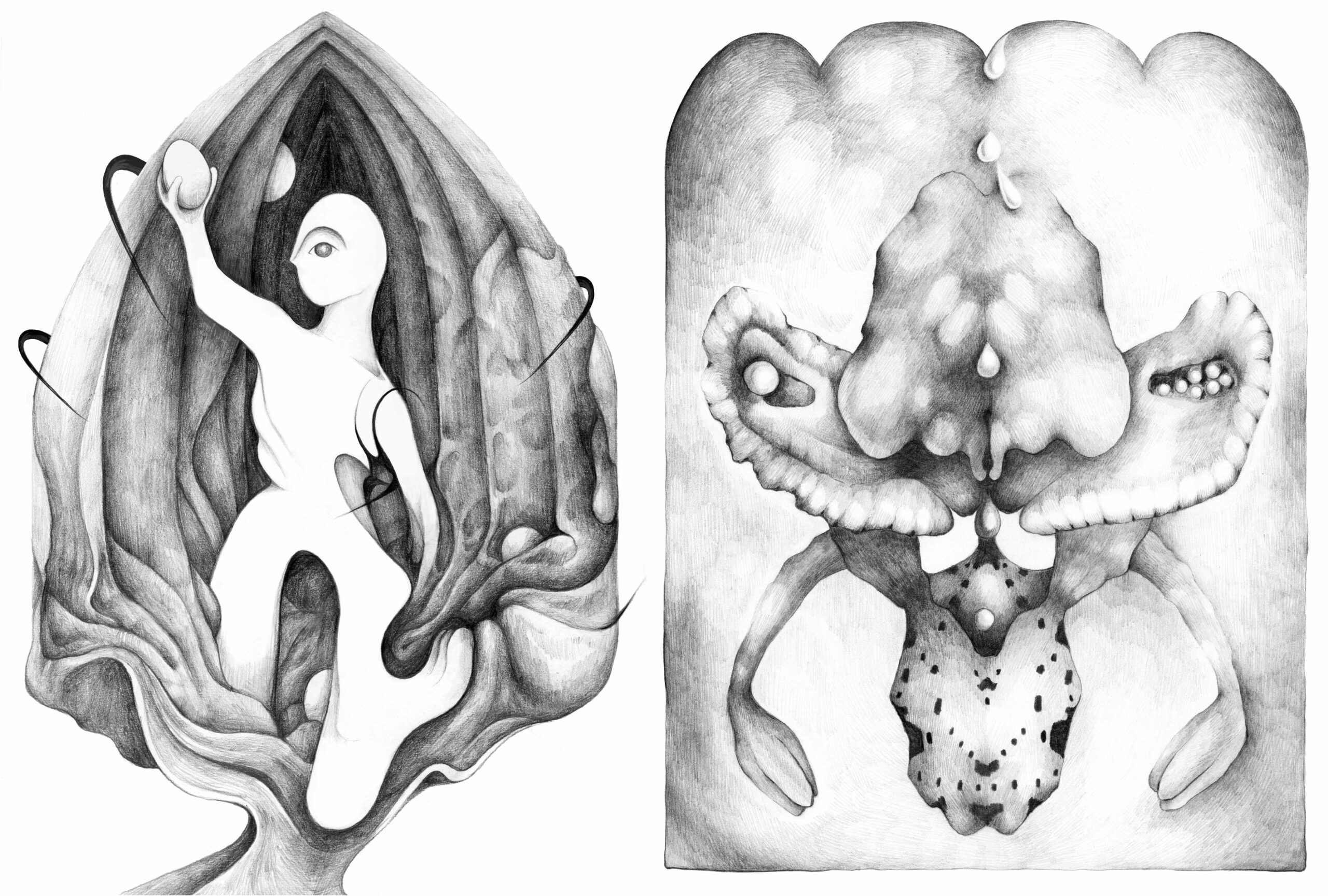
But Merike also shows how motherhood brought her closer to existentialist questions. Historically, and still today, motherhood is entangled with death and mourning. This darkness and ambiguity are reflected in the essay by Eda Tuulberg, who is curating a large show on motherhood in Baltic and Eastern European art at Kumu Art Museum in Tallinn. Furthermore, the short story by Mia Wennerstrandt and the visual essay by August Joost further explore the darker and more existentialist side of becoming.
Care takes many forms and one of them is curatorial care. Joonas Pulkkinen reflects on this in his research, weaving together theoretical inquiry with his own experience of becoming a father, and tracing how it reshaped his understanding of care. The article This is how we gave birth to Baltic feminism refers to Mare Tralla’s work of a similar name. In the article, Mare Tralla, Jana Kukaine and Agnė Narušytė show how feminist art was born in Estonia, Latvia and Lithuania in the 1990s, and how it has shaped the art scene since then. Often dismissed as a foreign narrative, these practices in fact grew out of the artists’ lived experiences.
This year, Sámi art is presented in exhibitions in both Tallinn and Helsinki. Marion Charlotte Bouvier focuses on the works of Britta Marakatt-Labba and the growing international recognition of Sámi art. Here becoming refers to the labour of making oneself visible in the global art scene. Alongside this, an article about the making of Baltic art museums and spaces together with our Events Guide take you on a trip through the region – perhaps with the map created by Alexei Gordin in hand.
This is the fifth print issue of A Shade Colder. When we launched the magazine in 2022, the full-scale invasion of Ukraine had begun only months earlier. Since then, we have sought to offer a platform for Ukrainian artists and to donate half of our sales to the Ukrainian Art Emergency Fund. The print issues come with stickers by Ukrainian artists – this time by Katya Buchatska, whose series reflects on the process of building a relationship with a newborn.
Becoming is an issue dedicated to transformation, new beginnings and narratives. At a time when we urgently need to rethink the systems that define our world, we turn to artists and other creative minds, to voices from previously marginalised regions, and to those who know how to care.