The course of the development of feminist art in Estonia, Latvia and Lithuania has been unconventional. While the Soviet Union had proposed its own distorted version of female empowerment, in the newly independent Baltic states of the 1990s, feminism was sometimes seen as a foreign ideology and not needed in the new democratic states. Often it was the artists who related to feminist ideas and translated these into the local context, taking into account their own lived experience and the ideas that were present at the time. In this article, artists and researchers Jana Kukaine, Mare Tralla and Agnė Narušytė offer three different perspectives on early feminist Baltic art.
Women as cool tourists in culture
The newly independent Republic of Lithuania inherited a patriarchal culture, where all major painters and sculptors were men, and only a few women were accepted as artists worth showing and writing about. Graphic and applied arts were more female, but even there, men occupied all the leading positions in art institutions.
Women were aware that they could use the acquired freedom to improve their position. While they felt excluded from the boom of artists’ groups, four women painters in Kaunas formed the group Keturios (Four) in 1990. However, the group was not allowed to show their works at prestigious art galleries, so they exhibited at an art historian’s apartment. In Vilnius, six women invited six men to found the group 1 in 1992 and enjoyed success. Women-only exhibitions were very few, but always noticed and discussed in the cultural press, especially Joan of Arc: Eight Comments, which took place at the Contemporary Art Centre in 1995. Women art historians generously praised women’s exhibitions in their reviews. Although curators of the major annual exhibitions at the Soros Centre for Contemporary Art tended not to invite women artists at all or included them at a ratio of around 4 to 24 or less.
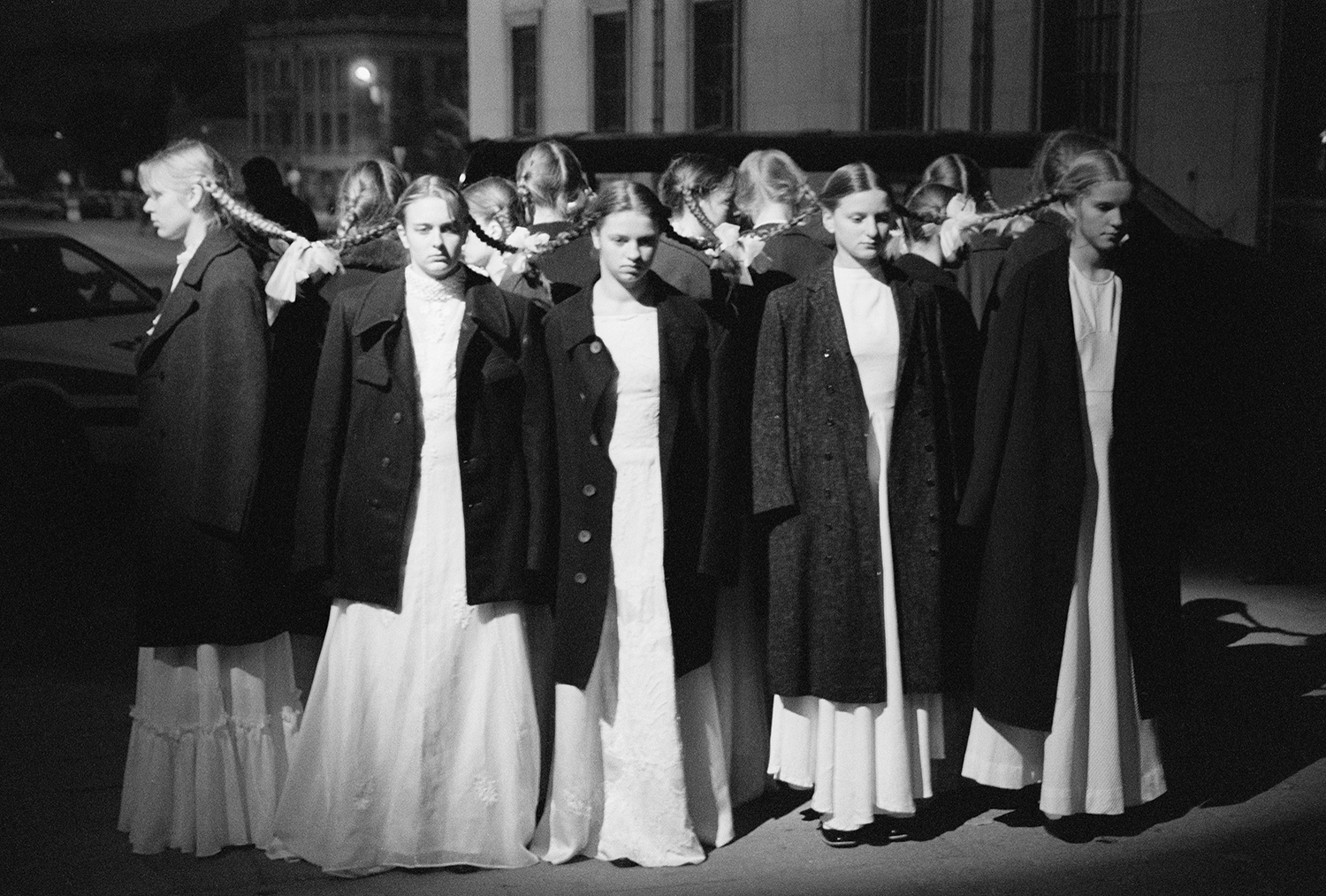
The single woman artist who gained prominence through these exhibitions was Eglė Rakauskaitė. Her live sculpture-performance For Guilty without Guilt. Trap. Expulsion from Paradise (Be kaltės kaltiems. Pinklės. Išvarymas iš rojaus) was presented at CAC in 1995. Thirteen girls, dressed in white dresses with men’s jackets draped over their shoulders, stood with their braids bound together into a net, symbolising the condition of women constrained by traditional expectations. Her other works also addressed feminist issues: she questioned the imposed necessity to shave excessive hair or lose fat, the fragility of bloom, the weightlessness of the foetus and so on. Other women artists – for example, Leila Kasputienė-Šukiur, Laisvydė Šalčiūtė, Eglė Vertelkaitė, Jurga Barilaitė – also reflected on women’s desire, motherhood, and sexuality. But most women artists avoided the term feminism, which was deemed to be dangerous and derogatory. Being called a feminist might label one as a freak and damage one’s chances of being invited to prestigious exhibitions – or this is what most women thought. Perhaps the only open feminist was Karla Gruodis, who also compiled a collection of essays by famous feminists of the world, Excursus of Feminism (Feminizmo ekskursai: moters samprata nuo antikos iki postmodernizmo. Vilnius: Pradai. 1995).
The situation started changing in the 2000s. The artist couple Nomeda and Gediminas Urbonas presented their audiovisual and architectural installation Transaction (Transakcija) at CAC in 2000, which prompted discussions about gender politics inherited from the Soviet era. Yet the most significant event was the forming of the anonymous group of women artists, Cooltūristės (“cool”+“culture”+“female tourist”+“female body builders”), in 2005. Led by its founder, art critic, artist and poet Laima Kreivytė, the group engaged in mis(s)appropriations of patriarchal symbols, they counted the ratio of men and women who received prestigious awards and represented Lithuania in international venues, they carried out critical interventions in major exhibitions, curated women’s shows and post-curated historical exhibitions to demonstrate the lack of women artists. Their consistent activities over two decades have initiated change: now it would be conspicuous if somebody presented an important male-only exhibition or awards list. Meanwhile, feminism has become a normal term accepted both by women artists and critics.
Between ambiguity and authenticity: feminist sensibilities in Latvia
Feminist art in Latvia is situated within post-socialist feminist frameworks that have gained increasing scholarly recognition over the past decades through processes of decolonisation, critical re-evaluation, and the diversification of transnational feminist inquiry. At the same time, post-socialist feminist art theory remains marked by contradictions, erasures, and methodological challenges. Gender equality is prevailingly framed as either a residual effect of state socialism or an externally imposed Western construct, together with dominant notions of art as the product of individual genius. These approaches distort contemporary feminist agendas and contribute to the marginalisation and erasure of locally situated feminist histories. Meanwhile, the uncritical application of Western feminist theories can produce misrepresentations and reinforce stereotypes, positioning the region as belated and perpetually “catching up.”
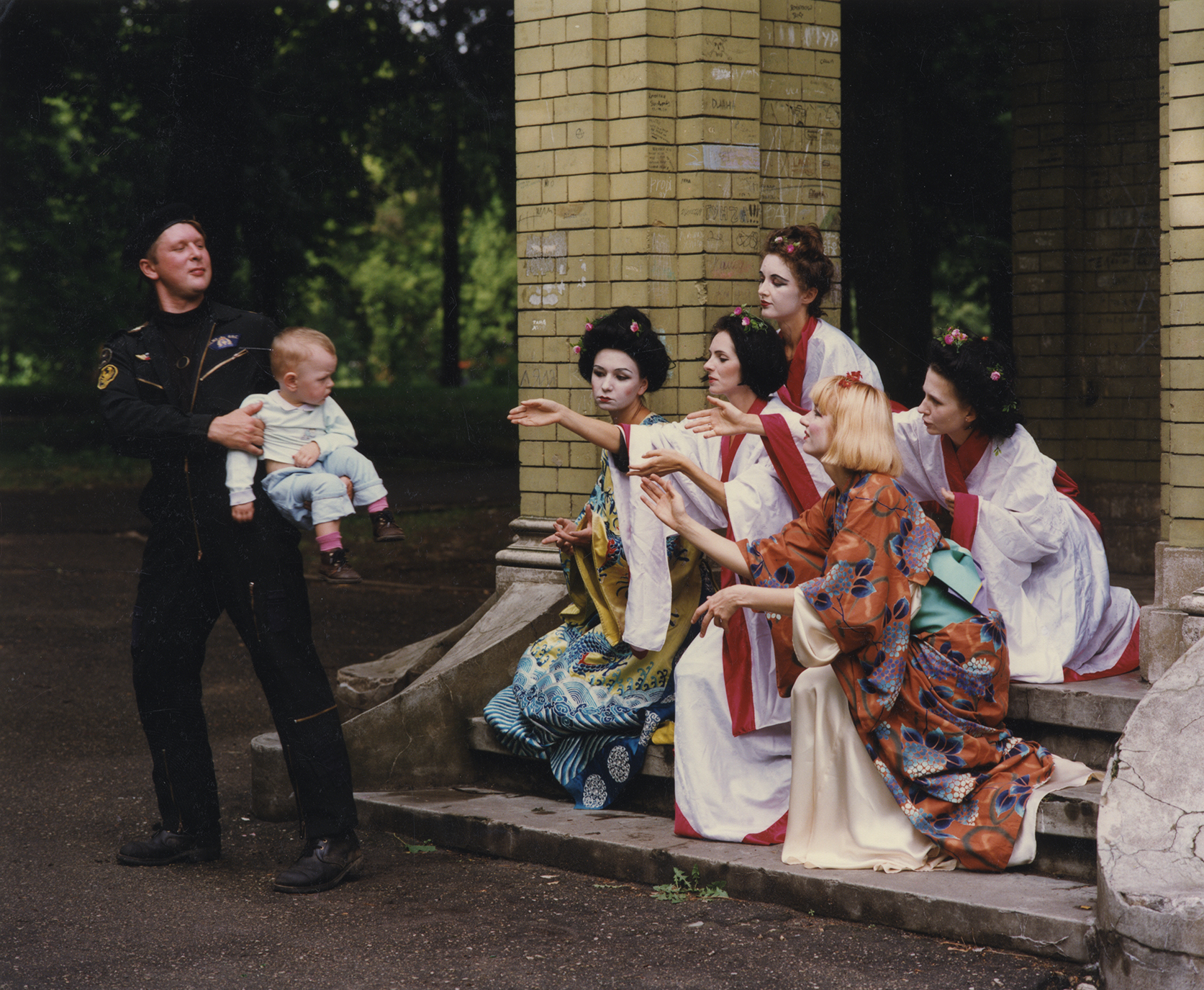
Although debates remain about how to identify and analyse feminist art in periods when neither artists nor art discourse employed the term, two art collectives stand out as thought-provoking examples. The LN Women’s League project (LN Sieviešu līgas projekts), involving artists Ingrīda Zābere, Izolde Cēsniece, Silja Pogule, Ilze Breidaka, and Kristīne Keire, and curated by Inga Šteimane, ran from 1997 to 1999. In sharp contrast to the male-dominated performance art scene then, the LN Women’s League project was the first group created and led by women. Their project Hearts received wider international attention, reinterpreting the plots of twelve popular operas and relocating them in post-socialist contexts to raise issues such as women’s dependence on men, self-infantilisation, and deprivation of agency (Figure 1). The group’s rhetoric was rather ambiguous. A provocative text by Šteimane, which offered a sharply worded denunciation of feminism while emphasising that the LN Women’s League itself had no affiliation with feminist agendas, was included in the influential 2010 publication Gender Check: A Reader – Art and Theory in Eastern Europe, edited by Bojana Pejić. At the same time, the group’s ideas and public communication strongly resonated with the broader gender-based social critique. I have discussed elsewhere how these strategies of discursive obscurity and self-shadowing were employed to craft space for vernacular, authentic, and self-determining art practices.
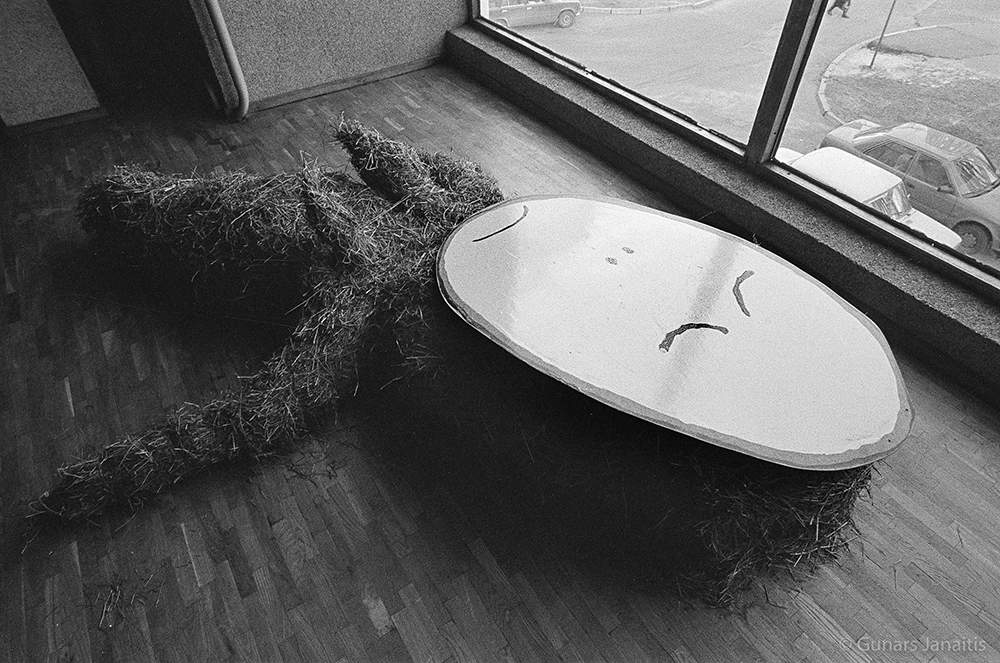
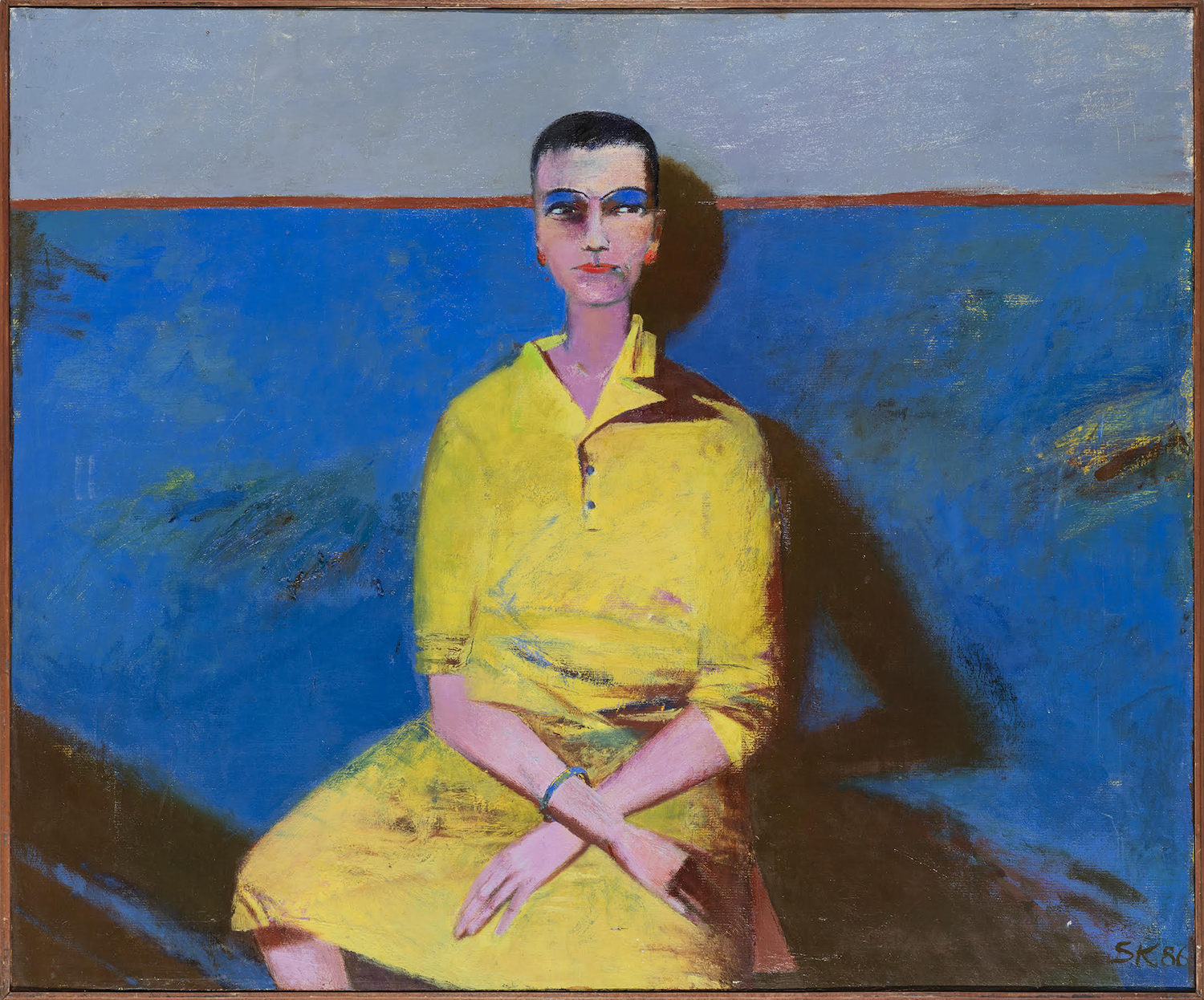
Tender Fluctuations (“Maigās svārstības”), the second art collective, has only recently come to be acclaimed for its feminist approach. The group emerged with their first action-based exhibition in 1990, amid the historic events marking the Baltic states’ path to independence. As Sandra Krastiņš, one of the group members, recalls, this tumultuous period was defined by a mixture of tension and uncertainty, firm determination, the excitement of creating something new, and an unwavering belief that everything would work out – an ethos that also defined the work of the two other female participants: Ieva Iltnere and Aija Zariņa (figures 2 and 3). In paintings and installations, they engaged with themes such as motherhood, sexuality, gender-based violence, care work and everyday life, each with their own distinctive artistic approach. These artists foregrounded the personal and the feminine as a critical lens to reflect upon the realities of the social and cultural transformation of that time, and simultaneously, carved out a space to express and validate their lived experiences, which at the time had often been marginalised and disregarded.
Most of the artists have developed a unique individual path within Latvian contemporary art, whose fuller situating within a post-socialist feminist framework remains a topic for further investigation. While the Baltic region remains underrepresented even within post-socialist feminist art studies, articulation of self-reflexive theoretical tools remains an urgent imperative. Such development relies on the careful examination of place-based art practices, attentive engagement with local histories and lived realities, and the creation of theory that is self-affirming in its spirit.
She is not a heroine anymore
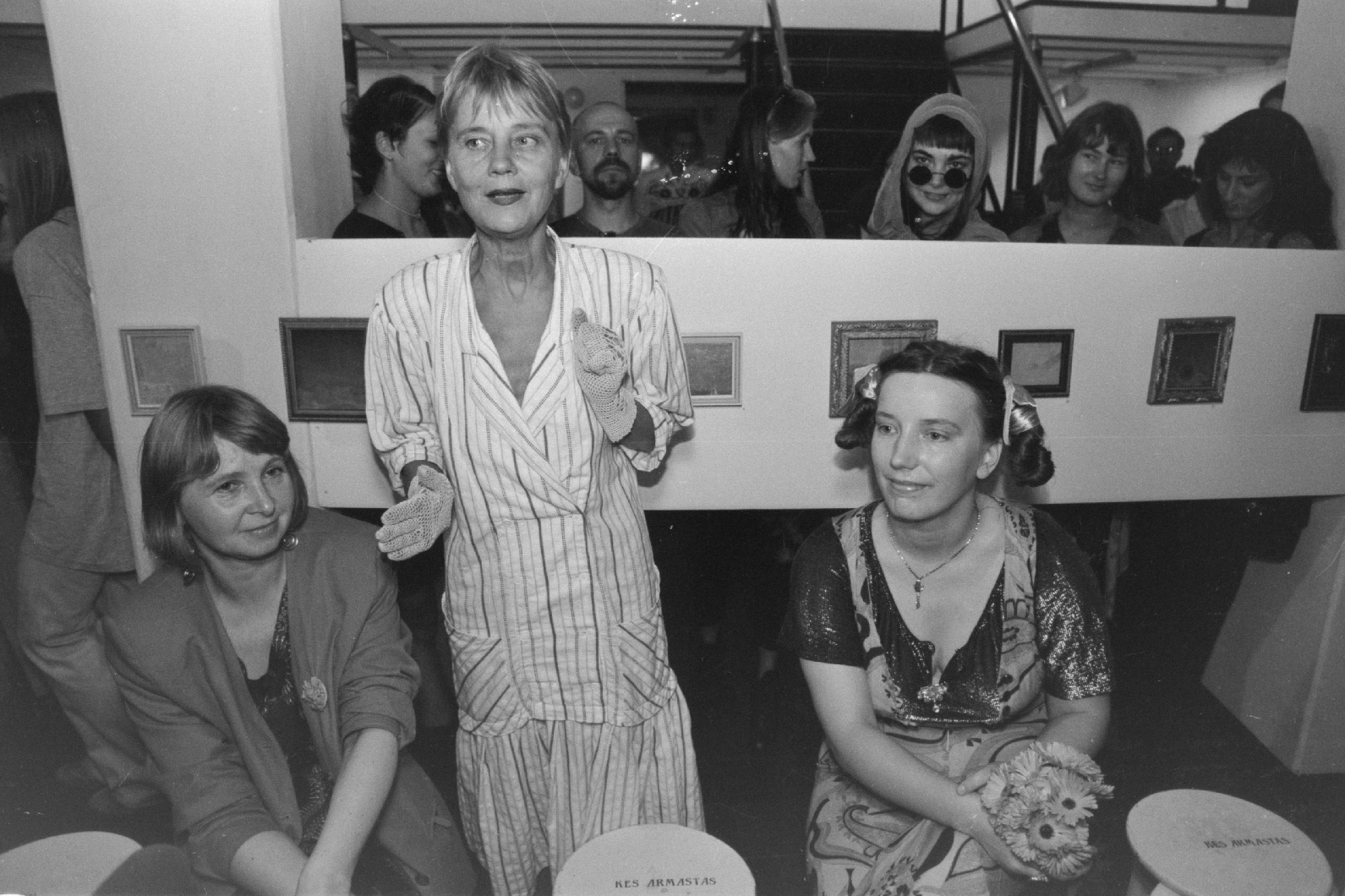
It is just over thirty years since EST.FEM (1995), arguably the first art project where Estonian artists intentionally engaged with feminism. EST.FEM was co-curated by art historians Eha Komissarov, Reet Varblane and me – I was also one of the participating artists. A year earlier Reet Varblane had curated the Estonian part of Swedish-Estonian project Code-Ex. At this show, the feminist critique of the patriarchy by Nordic artists helped to position the Estonian artists Anu Põder, Karin Luts and Epp Maria Kokamägi’s works on womanhood into a feminist context. These were the beginnings of Estonian feminist art.
The introduction of feminism into the culture of newly independent Estonia is often seen as imported from the West. While it is true that we were inspired by feminist theories and practices, such as the works from the Code-Ex exhibition, I would argue that the younger generation of artists were motivated by the rapid changes of the 1990s post-Soviet period and our own lived experience. Yes, finally we had freedom of speech and freedom of movement; however, the ‘westernisation’ of society profoundly affected women’s lives: their professional careers, their bodies were rapidly sexualised and pressured by traditionalist reproductive ideology. As noted by journalist Barbi Pilvre, the prevailing sentiment in newly capitalist Estonian society was for women to perform the ultimate feminine act and to sacrifice one’s life for others to live.
To illustrate this sentiment here is a quote from my personal manifesto: “After 1991 she finally could stay at home! Long live housekeepers! Her husband was making money, “a lot of cash”. She needed to learn how to be in bed with bananas and pineapples, how to use condoms and tampons. However, after all she seems to be happy! Therefore, she doesn't need feminism! Maybe. She is not a heroine any more: she is a toy – a Barbie doll in a beauty factory.”
EST.FEM was a process to find our voices: several informal get-togethers and a public seminar provided space for the artists and curators to discuss and learn from each other. Many of the participating artists, like Margot Kask, Kaire Rannik, Ele Praks, Piia Ruber, Kadri Mälk, Tiina Tammetalu, Anu Kalm, Mall Nukke explored autobiographies, memories and tested the constructs of gendered identities, including the LGBT perspectives by Lilian Mosolainen and Toomas Volkman. Only a few were more political, such as Piret Räni’s diary of a contemporary Estonian woman and my own installation That is how we gave birth to Estonian Feminism.
In 1995, dealing with feminism in Estonia was seen as voluntarily banishing oneself from society; thus, EST.FEM as a whole was a political statement. It opened up spaces where contemporary artists personal voices and experiences could have value and be expressed, it inspired a few artists to actively critique the patriarchy.
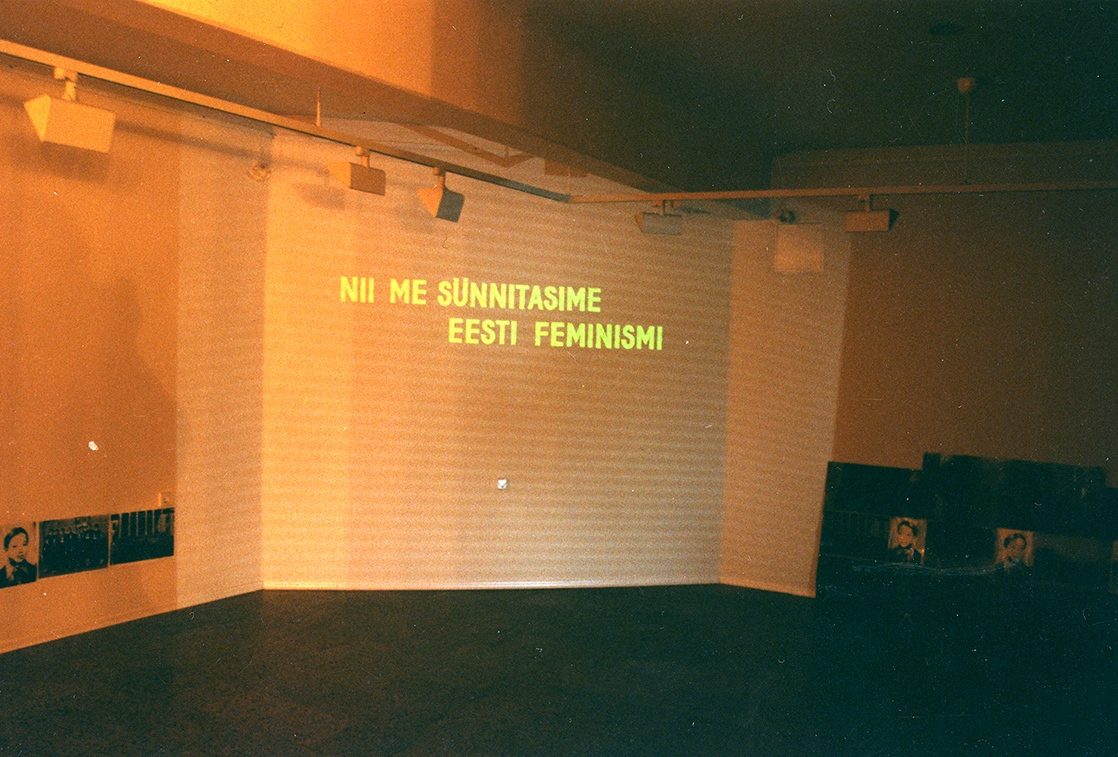
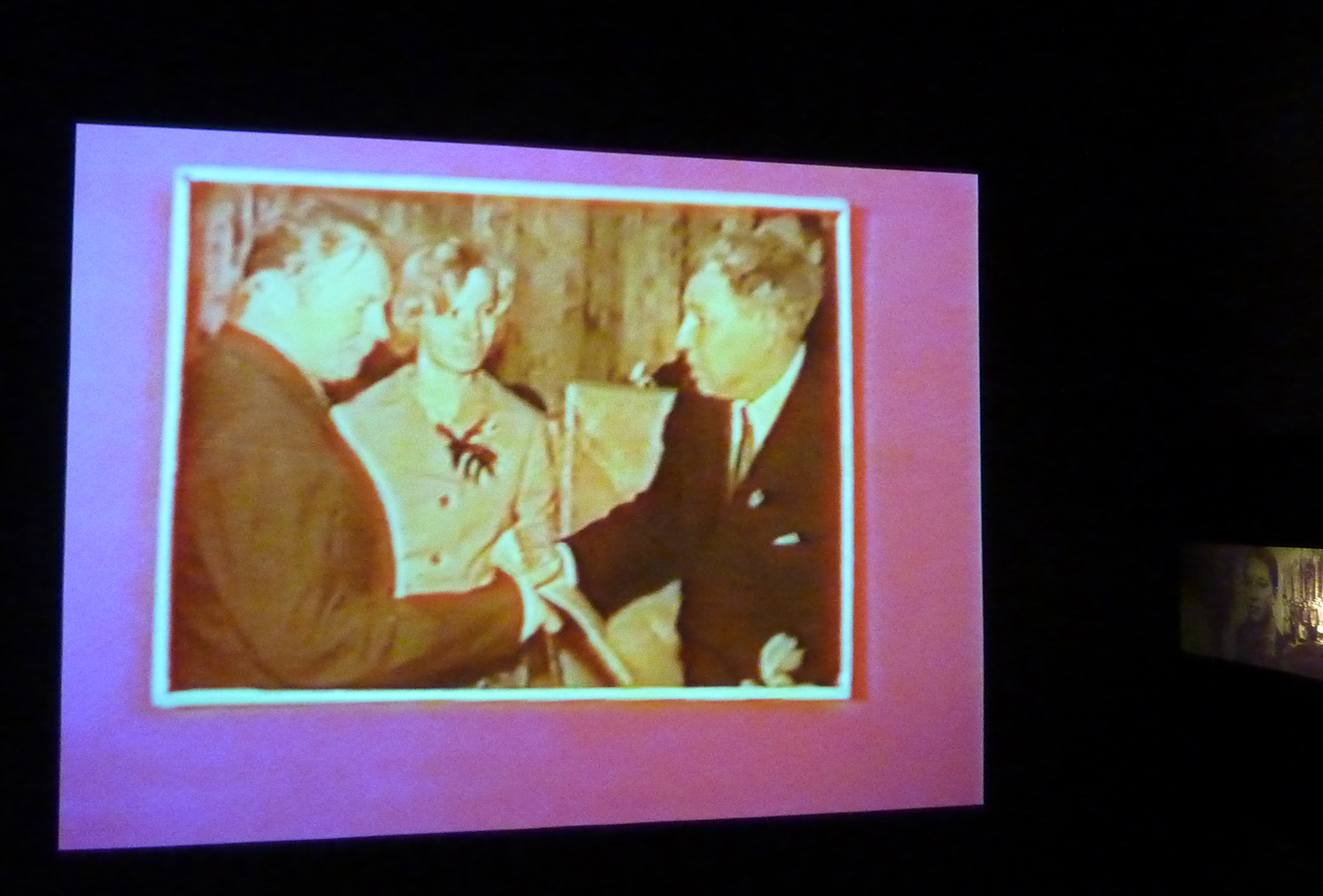
Mare Tralla, This is how we gave birth to Estonian feminism, 1995. Stills from the video installation